
Commercial thesis
Guyana's offshore Stabroek Block has moved from discovery to large-scale production in a few years. The operator reports seven approved developments, more than US$60 billion committed and installed capacity of 1.5 million barrels a day once the seventh project is online (ExxonMobil, 2025). Production passed 900,000 barrels a day in 2025 (IMF, 2026).
Each development brings years of demand for marine logistics, shore-base services, maintenance, inspection, safety, catering, fabrication, engineering and professional services. A second, onshore wave is the government's gas-to-energy programme and the industrial activity that cheaper, more reliable power could make possible.
For international suppliers, the opportunity is real but filtered. Most large contracts sit with the operator's tier-one contractors, and Guyana's Local Content Act reserves many service lines for Guyanese-owned companies. The commercially interesting space is often specialist capability that local firms do not yet have, delivered with or through a Guyanese partner.
Evidence
1.5 million barrels a day
Installed production capacity once seven approved projects are online, Hammerhead start-up, then anticipated in 2029
Source: Exxon Mobil Corporation, 22 September 2025
more than US$2.9 billion
Operator spend with Guyanese suppliers, 2015 to September 2025
Source: Exxon Mobil Corporation, 22 September 2025
approximately 2,000
Local suppliers engaged in the oil and gas industry, End of 2025
Source: Department of Public Information, Government of Guyana, 17 June 2026
Offshore oil: today's output against approved capacity
Barrels a day. The second bar is the operator's planned capacity once all seven approved projects run, not a production forecast.
- Production reached2025 · As reported by sourceover 900,000 barrels a day
- Installed capacity, seven projectsHammerhead start-up, then anticipated in 2029 · Forecast1.5 million barrels a day
Sources: International Monetary Fund; Exxon Mobil Corporation
The gap between the two bars is the construction and commissioning work still to come, which is where much of the near-term supplier demand sits. Once projects are running, demand shifts towards maintenance, inspection, logistics and services that recur for the life of each field.
- Local workforce and suppliers. A June 2026 government release reports that Guyanese made up about 68% of the sector's workforce at the end of 2025, that about 2,000 local suppliers were engaged, and that more than 40 companies had 2026 local content plans approved (DPI, 2026).
- Gas-to-energy. The project at Wales on the West Bank of Demerara includes a pipeline from the offshore fields, a combined-cycle power plant of about 300 MW and a natural gas liquids plant; in January 2026 the government said it remained on track for completion by the end of 2026 (DPI, 2026). The 2026 budget allocates GY$119.4 billion to energy (DPI, 2026).
Current developments
Project status matters more than headlines. The schedule below is the operator's own, stated at its September 2025 investment decision on Hammerhead (ExxonMobil, 2025), and the government's target for gas-to-energy (DPI, 2026). Later press reports suggest some dates may be brought forward; we treat the operator's statements as the reference until it confirms changes.
| Project | Status | Stated timing |
|---|---|---|
| Uaru (Stabroek Block) | Approved | Start-up planned 2026 |
| Whiptail (Stabroek Block) | Approved | Start-up planned 2027 |
| Hammerhead (Stabroek Block) | Approved September 2025 | Start-up planned 2029 |
| Gas-to-energy, Wales | Under construction, January 2026 | Completion targeted by end-2026 |
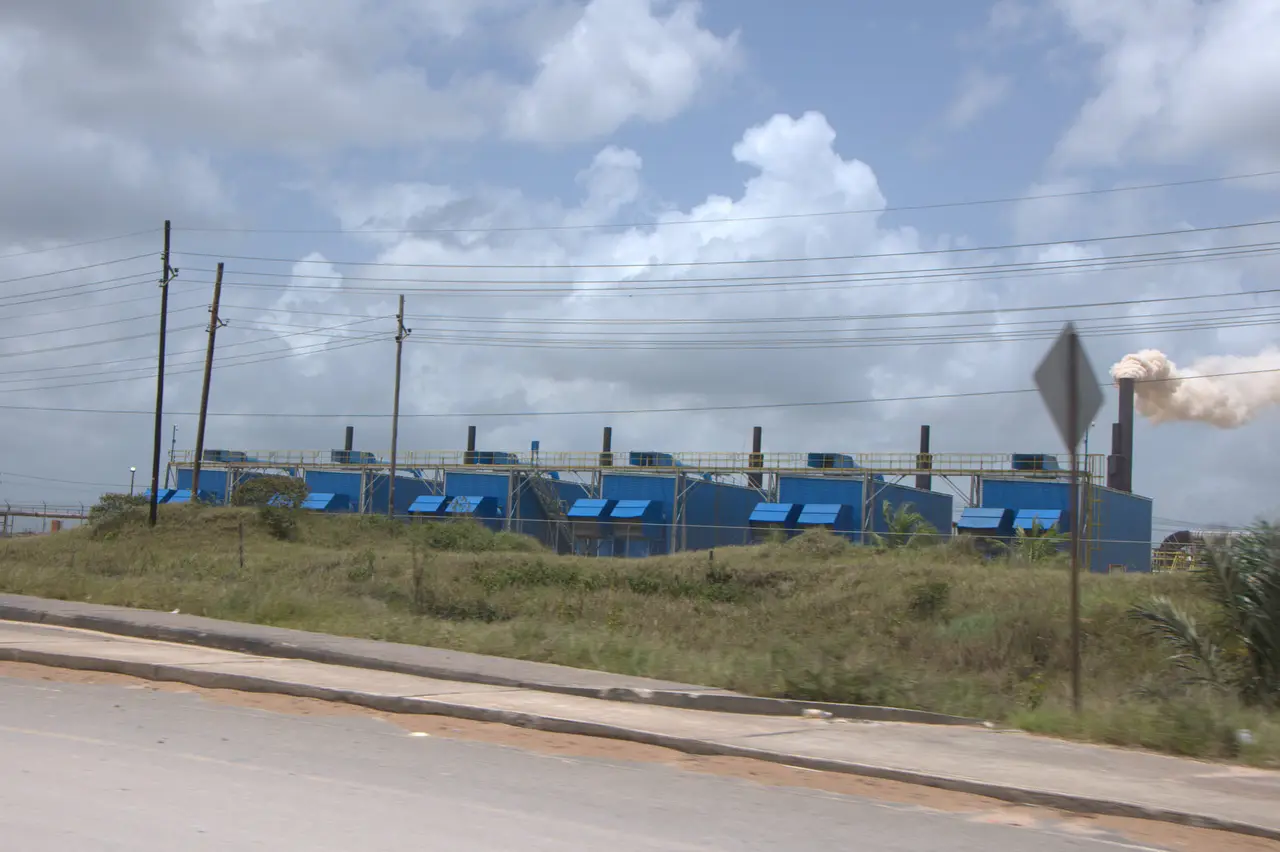
Power is the second, onshore market. Electricity is expensive and supply unreliable (U.S. ITA, 2026), which is why the gas-to-energy project and grid investment matter both to power-sector suppliers and to any business whose costs depend on electricity.
Offshore petroleum production, oilfield services, onshore industrial services and the new power system are different markets with different buyers. Most international suppliers will reach only one or two of them.
Potential opportunity categories
These are categories that may warrant investigation, not confirmed openings. Whether any of them is accessible depends on contract structures, local-content obligations and incumbents.
- Specialist engineering and technical services where Guyanese capacity is still thin: inspection, testing and certification, subsea and marine technical support, instrumentation and controls.
- Equipment, spares and consumables supplied through local distributors or stockists, where lead times and on-island availability matter to operators and contractors.
- Maintenance, repair and fabrication capability onshore, including partnerships that help a Guyanese firm meet operator standards.
- Health, safety, environment and training: certification courses, competency programmes and environmental monitoring.
- Logistics and shore-base support: warehousing, customs and freight handling, and services around the new shore bases and wharves.
- Power-sector supply around gas-to-energy and grid expansion: transmission and distribution equipment, metering, operations support.
- Industrial users of power: businesses whose economics depend on electricity costs, if and when cheaper power arrives.
Buyers and commercial counterparties
- The operator and its co-venturers, who run the seven approved Stabroek developments (ExxonMobil, 2025) and set supplier qualification standards.
- Tier-one contractors holding the large vessel, subsea, engineering and installation contracts. They buy from their own supply chains and are often the practical customer for a specialist.
- Guyanese service companies: about 2,000 local suppliers are engaged in the industry (DPI, 2026). For a foreign specialist they are as likely to be partners, distributors or subcontract customers as competitors.
- The power programme: the gas-to-energy project and grid expansion (DPI, 2026), whose buyers are public bodies and their contractors.
Market access and competition
Access is shaped by three filters. First, local content: the Local Content Act lists service lines and products to be sourced from Guyanese companies and defines what counts as Guyanese (U.S. ITA, 2026). Second, qualification: operators and tier-one contractors pre-qualify suppliers, and supplier registration does not by itself lead to an invitation to bid. Third, incumbency: established international service companies already hold long-term work, and Guyanese firms are building capability under the local-content regime.
In practice a newcomer competes on specialist capability that is scarce locally, delivered with or through a Guyanese company, rather than on price for general services. Structuring that relationship, including ownership and who holds the contract, is a legal question for a qualified Guyanese lawyer.
Who may fit
- Firms with oil-and-gas qualifications and track record elsewhere (for example in the North Sea, Gulf of Mexico, Brazil or Trinidad and Tobago) that can meet operator pre-qualification.
- Specialist service and equipment companies willing to work through, or invest alongside, a Guyanese partner to satisfy local-content requirements.
- Training, certification and HSE providers able to deliver locally.
- Electrical, power and industrial suppliers looking beyond oil to the onshore energy build-out.
Businesses without sector qualifications, experience or procurement eligibility should expect a long road. The opportunity is rarely as simple as offering a lower price. Where the question is which Guyanese company could carry the local-content share of your work, our partner and market-entry research shortlists candidates against agreed criteria and sets out what still needs verifying.
What remains uncertain
- Local-content rules The Local Content Act, in force since April 2022, sets targets for 40 service lines and products to be sourced from Guyanese companies, with defined ownership and management thresholds for what counts as Guyanese. In November 2025 the government consulted on expanding it, which the U.S. government flags as a possible barrier to entry (U.S. ITA, 2026). Check the current schedule before planning a business model around any service line.
- Access to procurement Major contracts flow through the operator and its tier-one contractors, often under long framework agreements. Being registered as a supplier does not mean being invited to bid.
- Timelines Project and gas-to-energy dates have moved before. Demand linked to a specific start-up date can arrive earlier or later than planned.
- Oil price and policy The IMF lists oil-price volatility among the downside risks to the outlook (IMF, 2026).
- Operating costs and skills Electricity is expensive and the grid unreliable, and skilled labour in engineering, IT, logistics and trades is scarce (U.S. ITA, 2026).
Key questions before entering
- Is your service line on the Local Content Act schedule, and if so, what does that mean for how you can deliver it?
- Do you buy from, sell to or subcontract under a tier-one contractor, and are you already on their approved vendor lists elsewhere?
- Which project milestones does your demand depend on, and how exposed are you if they move by a year?
- What Guyanese partner profile would you need, and what would each side contribute?
- Can you staff and support delivery locally, given skills shortages and power reliability?
Relevant official resources
- GO-Invest: key sectors, the government's investment-promotion agency (official priorities, not independent analysis).
- Department of Public Information on 2026 local content plans.
- U.S. International Trade Administration: Guyana market challenges.